Marking yet another interesting entry in the career of Cillian Murphy, an ambitious performer always tackling new genres and new characters, is Red Lights from director Rodrigo Cortes (Buried).
This time around, it’s a thriller and the subject is the paranormal. Dr. Margaret Matheson (Sigourney Weaver) and Dr. Thomas Buckley (Cillian Murphy) travel the country, investigating reported sights of the supernatural, disproving each and every one with relative ease.
Amidst their cynicism, world-renowned psychic Simon Silver (Robert de Niro) returns from a long controversial absence, making believers out of any and all who witness his abilities. So begins Tom’s slow descent into madness, determined to prove Silver is a fraud. But, can it be that Simon Silver is not a fraud?

Cortes proved a talented filmmaker in tight spaces with Buried, and here he’s eager to expand in every way. There are more than a couple of suspenseful sequences in beautifully-realized spaces, one hotel set piece in particular. The director owes a lot to his production designer, Antón Laguna. The same can be said for cinematographer Xavi Giménez, who succeeds in pulpy, but not garish, moody lighting.
Narratively, the film posits itself much like a magic trick (you’ll think of The Prestige more than once). Weaver and Murphy’s doctors convince their classroom (full of students who include Sundance faves Elizabeth Olsen and Craig Roberts), as well as the audience, that paranormal activity is nothing more than well-performed magic, and what follows is increasingly inexplicable events that make you, the viewer, question that which the film itself has told you is unreal.
De Niro, though barely in the film, is a palpable presence, enjoying the role of prophetic psychic much in the same way he enjoyed playing the devil in Angel Heart or a gay pirate, more recently, in Stardust. And though he’s over-doing it, he knows when to harness his energy, most notably in one particular, somewhat meditative scene with Tom towards the end of film.
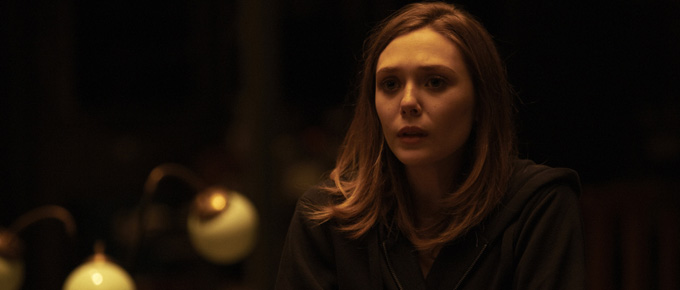
Olsen and Roberts are, unfortunately, so utterly wasted here you’d almost wish Cortes had cast other, less-engaging actors to play parts so minor. You can feel Cortes, who also edited the picture, trying to find as much extra footage of the two young starlets as he can in order to give their screen time more meaning.
Meanwhile, Weaver continues to prove she’s one of the most reliables actresses around, offering both humor and gravitas to a topic that wields an interesting amount of both emotions, many times all in one. This, perhaps, is the film’s greatest accomplishment. It knows both how silly psychic demonstrations are and how serious many people take them. There are as many laughs as there are scares on screen, breaking tension just as it begins to build it up again.
And thought it all feels like something that was perhaps a bit more intellectual and psychological on the page, the end result is nothing if not engaging. It’s nice to see Murphy in the shoes of a leading man, proving he can be whatever we need him to be.
via thefilmstage.
—

Presentato al Sundance Red Lights, dal regista di Buried
Sundance: Red Lights, il nuovo Ghostbusters
Il regista di “Buried” ha presentato il suo nuovo film, un thriller paranormale con Robert De Niro
Dopo aver esordito proprio al Sundance con il suo thriller “Buried – Sepolto”, il film che vedeva Ryan Reynolds sepolto vivo in una bara mentre tentava di salvarsi la pelle, il regista spagnolo Rodrigo Cortés ha scelto nuovamente il festival di Park City per presentare il suo nuovo lavoro, “Red Lights”. Un thriller sovrannaturale che è stato già definito “il ‘Ghostbusters‘ del ventunesimo secolo”.
Con la classica commedia horror di Ivan Reitman, “Red Lights” condivide la premessa e uno dei protagonisti. Sigourney Weaver interpreta infatti Margaret Matheson, una psicologa a capo di una squadra che si occupa di studiare e smentire i fenomeni paranormali. Ma davanti a loro, la Matheson e il suo assistente Tom Buckley (Cillian Murphy) potrebbero avere il caso più difficile della carriera, quello di Simon Silver (Robert De Niro), un famoso sensitivo tornato in attività dopo trent’anni di silenzio. La pellicola riserva anche ruoli minori alla pupilla del Sundance, Elizabeth Olsen, e a Toby Jones.
Le prime reazioni sul film sono divise. Slashfilm ne parla bene, citando alcuni spaventi ben realizzati e un certo gusto nel giocare con le aspettative del pubblico, ma poi si chiede: “Può un finale forse orribile rovinare un film per il resto riuscito? Il finale sfoggia un colpo di scena poco chiaro, che potrebbe non legarsi logicamente al film”. “Divertente e ricco di suspense, ‘Red Lights‘ intrattiene, ma solo se riuscirete a superare il fatto che sia totalmente esagerato e ridicolo – scrive Vulture – I tre protagonisti divorano i loro succosi ruoli e c’è uno scontro grandioso, estremamente violento e completamente gratuito ambientato in un bagno, con tanto sangue e porcellana rotta. E no, gli ultimi sei minuti non hanno senso e non vale la pena cercare di capirne il significato”. “’Red Lights‘ è un affascinante fallimento e forse diventerà un cult, ma è comunque un fallimento”, scrive HitFix, mentre The Film Stage ribatte: “Anche se sulla carta il film era forse più intellettuale e psicologico, il risultato finale è intrigante”.
Non resta che sperare in una distribuzione, per capire di persona chi abbia ragione tra le due parti. Purtroppo, molti acquirenti sono fuggiti dalla sala prima della fine della proiezione, e questo non può essere un buon segno per Cortés: “Buried” è stato venduto per tre milioni di dollari, ma il film poi andò male nelle sale. Che ci sia ancora qualcuno disposto a dargli credito?
—
—
Red Lights
Plot: Director Rodrigo Cortes follows up Buried — where he buried Ryan Reynolds alive and made a splash at Sundance a few years back — with this story of scientists Dr. Margaret Matheson (Sigourney Weaver) and Dr. Tom Buckley (Cillian Murphy), who travel around debunking the work of psychics, mediums, and all other paranormal phenomena. Things get weird and complicated when Matheson’s long-time rival, Simon Silver (Robert De Niro), comes out of a 30-year retirement to demonstrate his talents at healing, mind control, and projecting his thoughts onto film … but is he for real?
Reaction: Fun, suspenseful schlock, Red Lights (the name refers to the telltale signs of fraud that Matheson and Buckley are trained to spot) is quite enjoyable — that is, if you can get past the fact that it’s also completely over-the-top and ridiculous. All three leads rip into their meaty parts, and there’s a great, extremely violent, completely gratuitous fight in a bathroom complete with lots of blood and broken porcelain. And, no, the final six minutes do not make any sense, and it’s not worth trying to figure out what they mean. (via Vulture)
—
Rodrigo Cortés made a name for himself with a film that premiered at the 2010 Sundance Film Festival: Buried, based on Chris Sparling’s black list script about a man buried alive who has to figure a way out of his coffin before his air supply is used up. The film starred Ryan Reynolds, and was critically praised for it’s direction, a tough task considering the 95-minute film takes place completely inside a casket.
Cortés returns to Sundance two years later with the $15 million thriller Red Lights, which he also wrote. The story follows Psychologist Margaret Matheson (Sigourney Weaver) and her assistant Tom Buckley (Cillian Murphy) as they study and disprove paranormal activity, parascience and psychics. But can they take down world-renowned psychic Simon Silver (Robert De Niro), who has come out of retirement after three decades?
This is a 21st century Ghostbusters. What if Venkman, Stantz and Spengler never got fired from their parapsychology professor jobs? What if they took their research seriously and mounted a serious fight against the world of paranormal scams (a la skeptics James Randi and Penn Jillette), busting “ghosts” through scientific research. Or you might even be ale to think of it as a Ghostbusters spin-off — what if Dana Barrett (Weaver’s character in GB) left the company of the Ghostbusters and became a skeptic?
Red Lights has great fun building your expectations with sound science and skeptic-based theories, and later playing with these ideas, making you question if extrasensory perception might be possible (if only in this movie). The film also sets up a few great scares and jumps, which had the Eccles theatre screaming.
In addition to the primary cast, 2011 Sundance “it girl” Elizabeth Olsen plays a role, and Toby Jones also has a supporting part in the film. Both actors, however, are almost completely unnecessary to the film’s plot.
Can a possibly horrible ending ruin a otherwise entertaining film? That is the question with Red Lights. The last third of the film becomes something much different than what the first two acts lead one to expect. The end features a twist that is confusing and might not fit logically. I’m sure the film might draw comparisons to Christopher Nolan’s The Prestige or Alex Proyas’ Knowing. Unfortunately, Red Lights isn’t as well plotted and intricate as Prestige and lacks the explainable, interesting, yet ridiculous twist of Knowing. (And no, Red Lights has nothing to do with god or aliens).
I’m not convinced that everyone will hate the ending. I’m not even sure I hated the ending. 24 hours later, I’m still not sure what to think about it. But think about it I have. During the question and answer session which followed the screening, one audience member had the balls to ask Cortés to explain what exactly happened during the film’s conclusion. Rodrigo responded that he would rather us interoperate the film for ourselves and come up with our own answers. His hope was that the film would create discussion.
I spent over an hour discussing the ending with other bloggers who saw the film. We were able to come to some conclusions, but various points have no explained (or sometimes logical) answer.
Are the mysteries in this film to discuss? Or are they just plot holes that were left open for discussion?
 The Artsy Film Blog