READ MORE @ | Word and Film HERE!
Word&Film: This film celebrates our deepest flaws and failings and how the things that make us seem crazy to the outside world are also the very qualities that make us loveable and human. Was that part of your intention while writing the book?
Matthew Quick: Absolutely. I always say that artists live on the fringe. For seven years after undergrad I was teaching at a very prestigious high school and I was going in every single day and I was playing the role for my students. I was a very good high school English teacher and I was a very good counselor of teenagers. But inside I was very depressed. I was going through a lot of things partly because I wasn’t doing the one thing I wanted to do, which was to write. I was counseling my students to pursue the arts, so I also felt like a hypocrite. The other part was that there were a lot of weird quirky things going on inside of me that I didn’t let show. But when I started to write, I started to explore my psyche and all the things that make me Matthew Quick, or “Q.” And part of that was the fact that I do deal with depression. I do have anxiety issues. I can get overwhelmed with emotions. I had always been embarrassed by those traits but it’s also what fueled my writing. And the more that I came to understand that, most of my heroes who are novelists like Hemingway or Kurt Vonnegut, these are people who know the wild ups and downs. These are quirky people. These are people who are not mainstream. That was a revelation to me. So when I was writing the character of Pat Peoples, everybody thought they knew this guy. But when he gets locked up in a mental health facility and when he comes home he says, ‘That old guy, that’s not me. I’m going to show you the new Pat Peoples.’ Those who know him struggle to wrap their mind around the new Pat and he fights really hard to create this new identity. I was talking about this with David O. Russell. Pat doesn’t have a lot but he does the best with what he has and that’s a beautiful thing.
W&F: People have so many labels for quirky people who don’t follow the social contract of how ‘normal’ people are supposed to behave. Aspbergers. Tourretes.
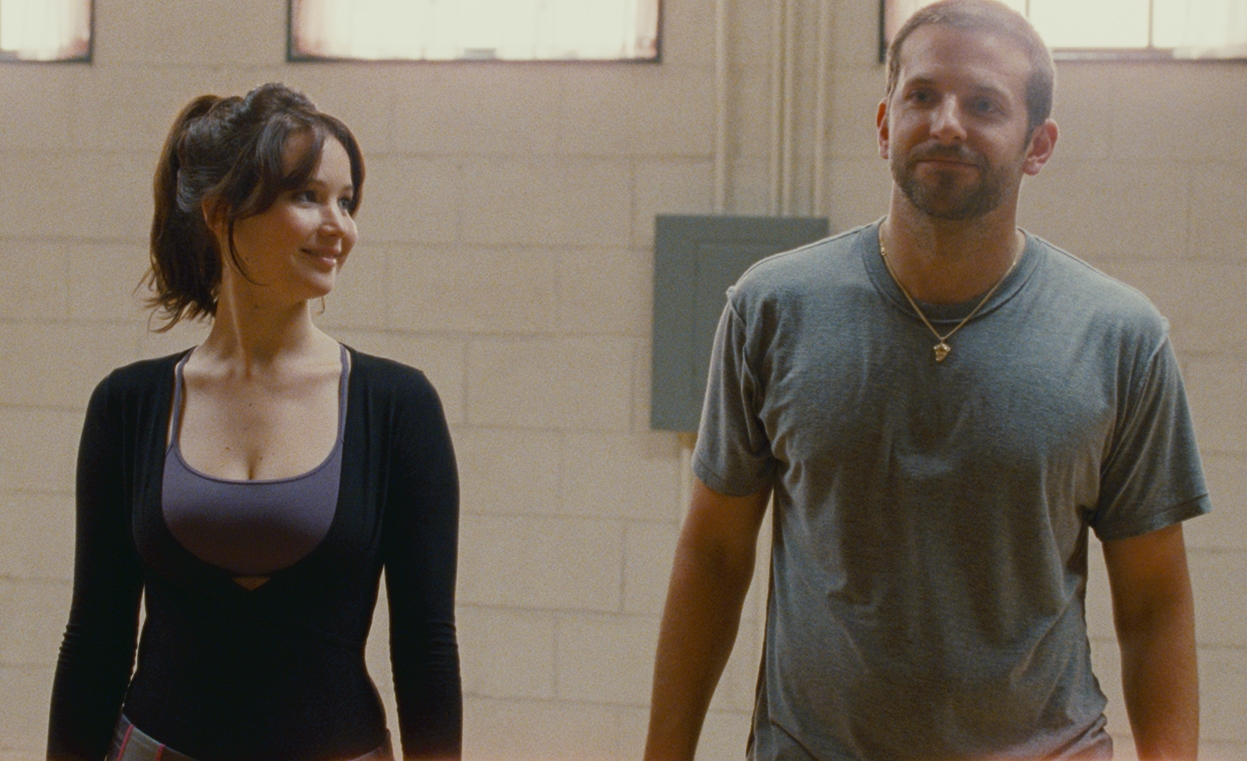
MQ: One of the big things for me is that I don’t like to label my characters. I don’t like to come out and say ‘my character is bipolar’ or ‘my character is diagnosed with autism.’ In the film they come out and label Bradley Cooper’s character bipolar early on. But in the novel I don’t do that because I don’t think you know someone just if you know their diagnosis. If you know someone’s diagnosis or label, you don’t know somebody. People are much more than that. Someone who is bipolar, that is just one part of their personality. There is a lot more to Pat Peoples than his diagnosis. And I think people who consider themselves part of the mental health community, and I consider myself a member, we understand it’s important to understand these things so we can talk about them. But you are not your diagnosis. You are much more than that. You are a human being.
W&F: What does it mean to be part of the mental health community?
MQ: For me the mental health community is anybody who is suffering from some form of mental illness or someone who loves someone who is suffering from some form of mental illness or the advocates who lead the way for mental health. The mental health community is people who are willing to talk about this stuff honestly and make people feel less alone. It’s not just people suffering from depression.
W&F: That probably encompasses everyone in the world on some level.
MQ: All the work I’ve published and all the work I’m contracted to publish is about mental health in one way or another. And that’s not accidental. My first job out of college was working with teens diagnosed with severe autism and what I found was that people who are in these communities are the most open minded, kind accepting people. So I don’t know why anyone wouldn’t want to be part of the mental health community. But there is still that stigma out there, unfortunately. And there are still people who can’t handle talking about this, let alone associating themselves with the words mental health.
W&F: What was interesting about the book and film was that this was a family who wasn’t versed in this sort of thing but they did learn to love and accept each other despite that.
MQ: Growing up, my family was blue collar Philadelphia. My great grandmother died in an old school mental institution but I didn’t even know about it. I would say that I was definitely suffering from depression in high school and college but I didn’t even know it because we didn’t even use the word depression in my community. When I started working in a lock-down unit with teens diagnosed with autism, that’s when I started to learn a lot and when I started to realize that by serving people I could benefit from all of this myself. If you don’t come from a family or community where you have the vocabulary to talk about this let alone the resources to get help, you’re a novice. This is new. You have to learn. I think the great thing for me, as soon as I started to talk openly about suffering from depression, is that you find so many allies. Most of my writer friends and the artists I know all deal with depression and anxiety. Most of them are in therapy and talk about it very openly. So the stigma is gone for me and it’s very freeing. But that took a long time. I don’t think I openly talked about the fact that I go into depressions from time to time until my early thirties. So that’s something that needs to change.
W&F: Because of the subject matter of this book, were you surprised that there was interest in making a movie out of it?
MQ: I wasn’t surprised because there have been films in the past about mental health issues. And of course, based on David O. Russell’s previous work, it didn’t surprise me that David would be interested in this project. What’s surprised me most was how far this has gone. When I was writing this in my parents unfinished basement, I thought, ‘Just write this story and save yourself. Get yourself out of this depression and be a writer.’ It was therapy for me in many ways. Every day, people who have seen the movie and read the book are saying that this story and these characters, they’re using words like literally ‘lifesaving.’ And when I read that, what it’s telling me is that people are so desperate to know that they’re not alone. That’s what happening. When they read this book, they realize they’re not alone. For me I couldn’t ask for anything more. That’s what story has done for me. I always felt secretly that I didn’t belong and that I had problems and that I wasn’t like any of my friends and that my mind worked differently. I feared something was wrong with me. But I put my most authentic expression of myself on the page and people came back and say that not only did it resonate with them but it’s helping them. So I couldn’t ask for anything more as a storyteller.
W&F: It was lucky that you found someone who is such a kindred spirit in David O. Russell, whose films all celebrate what’s weird or different about people.
MQ: I was talking about this with David this morning and he said he was looking for a long time for a project he could do for his son, who is a part of the mental health community. He wanted to do something that would make his son feel like he was a part of the world. So for me, I can say I’m grateful. But the other way around is that there is such a great need for stories and conversations like this. So maybe it was just filling a need. People want to talk about this stuff. David was looking for a project like this so he could put this story on screen. I had stumbled onto something people were ready for.
W&F: Was it scary to expose the darkest parts of yourself in this?
MQ: It was scary. I could hide behind the mask of fiction and that’s a comforting thing. The novel is fiction and we can put that mask on. I needed to define my best self. I needed to work on my own mental health and express myself and talk about the stuff I was suppressing for so long. So it felt really liberating to write this story. And of course, everything since has just been really great too.
 The Artsy Film Blog